
On this page
What paint sheen is, and how it is measured
Sheen is one of three choices on any job of interior painting in Ottawa, next to the colour and the paint. It decides how a wall looks in low winter light, how well it takes a wipe, and whether a touch-up shows.
Makers measure it by bouncing a beam of light off the dried paint into a receptor, which reads it in units from 0 (no shine) to 100 (mirror-like). Sherwin-Williams explains the two angles the industry uses: gloss is read at 60 degrees, and sheen at 85 degrees, close to skimming the surface. Differences of sheen are most noticeable in low-gloss paints.
So on both makers’ data sheets, flat, matte and eggshell are rated at 85 degrees, and satin and semi-gloss at 60.
The numbers on the data sheets
The ranges printed on each maker’s data sheet for one wall paint: Benjamin Moore’s Regal Select (Canadian sheets) and Sherwin-Williams’ SuperPaint. A higher number means a shinier finish. They are named because their sheets are public.
| Finish | Benjamin Moore Regal Select | Sherwin-Williams SuperPaint |
|---|---|---|
| Flat | 1 to 4 at 85° | 0 to 5 at 85° |
| Matte | 3 to 5 at 85° (Ulti-Matte) | Not in this line |
| Eggshell | 15 to 22 at 85° | Not in this line |
| Satin | 20 to 30 at 60° (Pearl) | 10 at 60° |
| Semi-gloss | 50 to 60 at 60° | 25 to 35 at 60° |
Two things stand out. Eggshell and satin numbers cannot be compared, because they are read at different angles. And the same word does not mean the same shine: Regal Select Semi-Gloss reads 50 to 60 at 60 degrees, SuperPaint Semi-Gloss 25 to 35, nearer to Regal Select’s Pearl. Sherwin-Williams itself warns that one brand’s gloss can look like another brand’s semi-gloss.
So to match a wall or compare quotes, ask for the maker and the product as well as the sheen, as our guide to reading a painting quote advises. At the ends of the scale, Benjamin Moore’s Waterborne Ceiling Paint reads 0 to 2 at 85 degrees, and its ADVANCE High Gloss reads 85 and up at 60.
Which sheen for which room in an Ottawa house
Benjamin Moore’s sheen chart runs from more forgiving of imperfections at the flat end to more durable at the glossy end. Read against the data sheets and its note on burnishing, it puts each finish here:
- Ceilings: flat. The Regal Select Flat sheet calls it ideal for ceilings and low-traffic areas, and a ceiling is rarely touched or washed.
- Living rooms, dining rooms and bedrooms: matte or eggshell. Benjamin Moore lists both for these rooms. Flat works where nobody brushes the walls, but rubbing or washing can burnish it into shiny patches.
- Front halls, hallways and stairwells: eggshell or satin. These walls take boots, bags and hands all winter. Benjamin Moore lists eggshell and satin for high-traffic walls, and names hallways and stairs where flat paint burnishes.
- Kitchen walls: eggshell or satin, for the same reason: they get wiped. Cabinets are a separate job with their own paints.
- Trim, doors and wainscoting: semi-gloss, or satin for a softer look. Benjamin Moore lists semi-gloss for trim, doors, cabinets and wainscotting.
- Bathrooms: a paint made for humidity first, then the sheen. The next section explains why.
For cabinets, our guide to the best paint for kitchen cabinets compares the enamels made for them. For baseboards, casings and crown, see trim and crown moulding painting.
Bathrooms and winter condensation
A bathroom is where sheen gets the most credit. Sherwin-Williams notes that glossy finishes are common in bathrooms, because higher sheens have traditionally been the toughest. But the trouble on Ottawa bathroom walls in winter comes from moisture. With the windows shut for the heating season, a shower’s steam stays in the room unless the fan takes it out.
Health Canada advises keeping indoor relative humidity at 30 to 50 per cent and using bathroom and kitchen fans.
Fresh paint is most at risk. Benjamin Moore says surfactant leaching, a sticky, glossy or brownish residue, shows up most on bathroom ceilings when new latex paint meets condensed moisture while it dries and cures. Sherwin-Williams lists moisture or condensation while drying as a cause of flashing, an uneven sheen across one wall.
So the answer is a paint made for humidity, and it can be matte: Benjamin Moore’s Aura Bath & Spa reads 3 to 4.5 at 85 degrees. Its sheet asks for 24 hours before full use and two weeks before washing, so run the fan and give new paint its day.
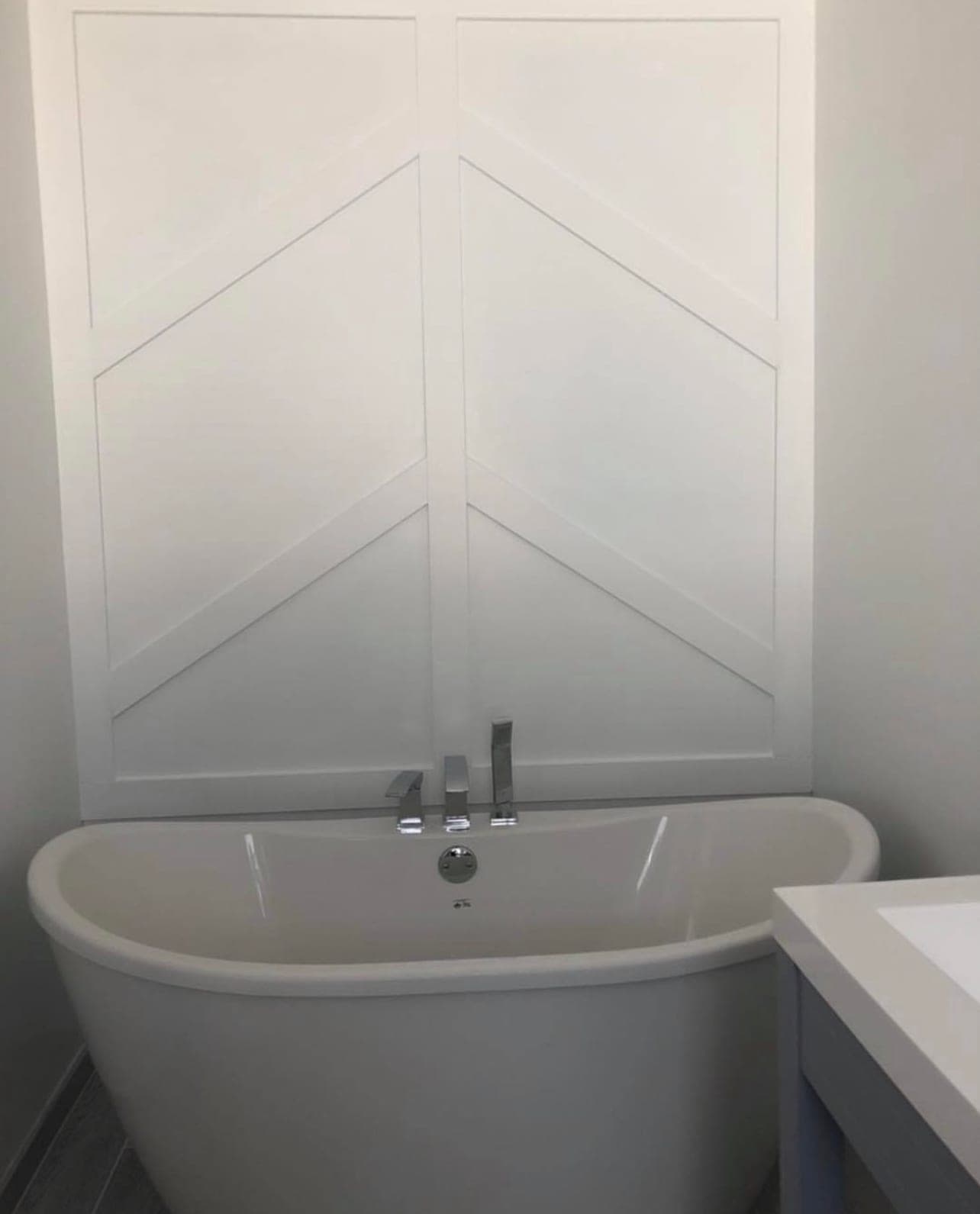
Bathroom ceilings are a common call for us, and the damage is usually moisture rather than a leak. An underpowered or poorly vented fan puts enough humidity into the room to blister and peel paint over time. Our page on ceiling repair in Ottawa covers the fix, and we point out when the ventilation is the cause, because otherwise it happens again.
Why sheen decides how a touch-up shows
The flatter the finish, the easier the touch-up, and the glossier, the harder. That is Benjamin Moore’s rule, and the most practical reason to think about sheen in a house with kids, pets or a busy front hall.
A dab of the right colour can still show as a patch. Sherwin-Williams lists the usual causes:
- A different tool from the first coat, such as a brush on a rolled wall.
- A different batch of paint.
- A repair whose texture differs from the wall around it.
- A temperature very different from the day the wall was painted.
Low winter sun makes it worse
In late December the noon sun over Ottawa sits only about 21 degrees above the horizon, as our guide to choosing a colour for Ottawa light sets out. Low sun through a window skims along the walls beside it, and light at a shallow angle is the light that shows a difference in sheen. On satin or semi-gloss, a touched spot reads as a shiny or dull patch.
Habits that make touch-ups match
Label each can with the brand, colour, sheen and room, and touch up with the same applicator, in the same direction, as Benjamin Moore suggests. Sherwin-Williams says to spot-prime a patched area first. After a bigger repair, repainting the wall corner to corner is usually what makes it disappear, as our guide on patches that show through paint explains.
When a wall needs more than a dab, that is drywall repair in Ottawa first, then paint. At the final walkthrough on an interior job, we fix anything the owner flags before we leave.
Eggshell vs satin for walls
Eggshell for most walls, satin where walls get handled and washed. Benjamin Moore says satin has a higher gloss than eggshell, with better stain resistance and durability. The cost is that it shows more: its pearl finish is more susceptible to lap marks and other painting flaws, so it wants a smooth wall and a careful painter.
Washability is closer than the names suggest. Every Regal Select sheet, flat to semi-gloss, says the paint can be washed after two weeks. On the SuperPaint sheets, the satin lists burnish resistance and the flat does not.
Satin vs semi-gloss for trim and doors
Satin on walls and semi-gloss on trim and doors is the usual split. At the same 60-degree angle, semi-gloss reads about two to three times the satin or pearl number on both makers’ sheets (see the table above).
That extra shine suits baseboards, casings and doors, which take hands, feet and the vacuum. On a whole wall it works against you: Benjamin Moore says gloss accentuates blemishes, so every dent, patch and roller lap catches the light. High gloss goes further still and, the maker says, needs careful application and preparation.
How to choose a sheen for each room
Five steps, in this order:
- 1. Start with the room's job. Flat on ceilings, matte or eggshell in quiet rooms, eggshell or satin on busy walls, semi-gloss on trim and doors.
- 2. Check the light. Sherwin-Williams warns that a glossy finish in a room with plenty of natural light can give glare, so sunny rooms suit lower sheens.
- 3. Check the wall. Patched, older or wavy walls look best under flat or matte, because low gloss hides flaws.
- 4. Pick the product, then the sheen. Sherwin-Williams' gloss and sheen guide says to choose the product for the job first, then the sheen that line offers.
- 5. Write it down. Maker, product, sheen and room, on the estimate and on the can lid, so a touch-up years later matches.
Ottawa Luxe Painting’s estimate is free, written and itemized, and our colour consultation helps with colour if you want it. Bring your sheen questions to the same visit.